NotebookLM's Cinematic & Shorts Video Feature: A 2026 Hands-On Review
It’s mid-2026, and my video editing suite has been collecting dust. The culprit? Google's rumored NotebookLM cinematic video and shorts video feature 2026. I spent a week with it, and my workflow will never be the same. Here's the hands-on review.
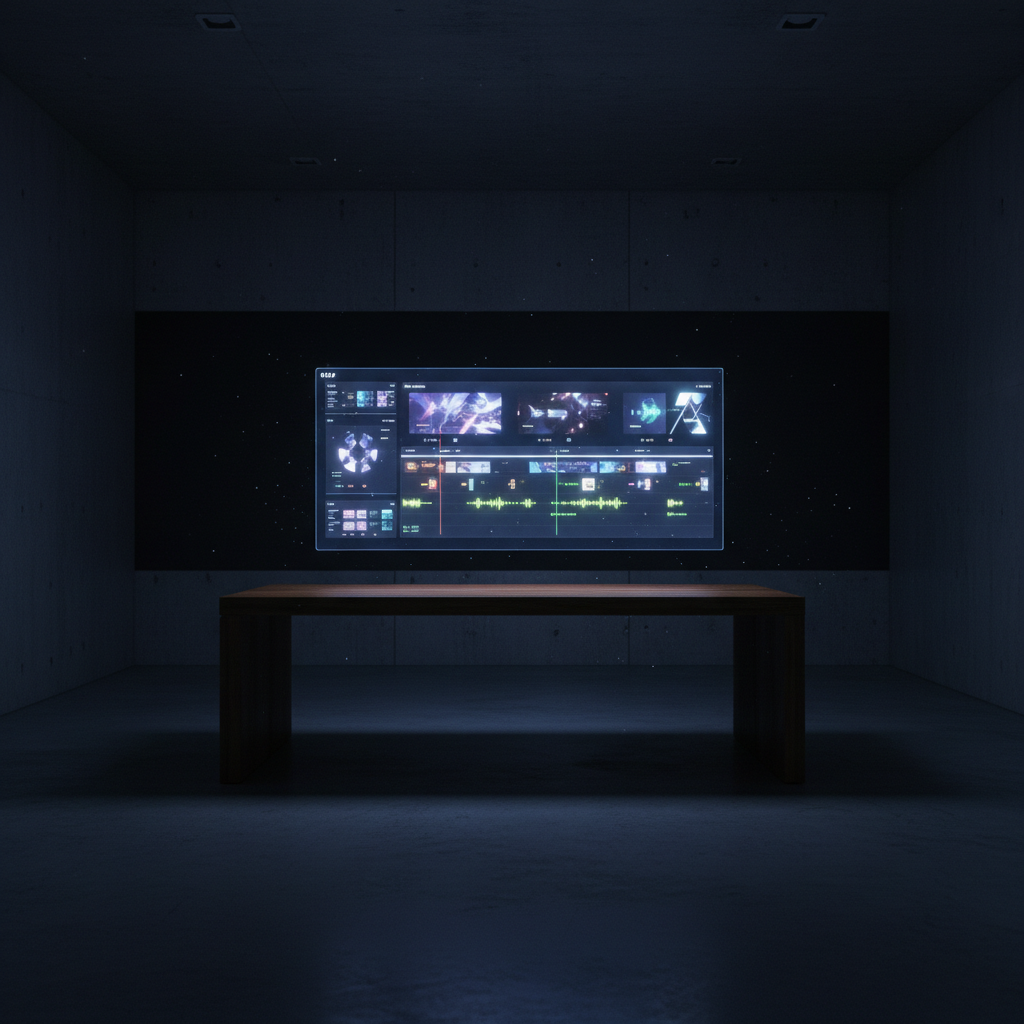
TL;DR Google's hypothetical NotebookLM video feature for 2026 isn't just another text-to-video generator. By grounding outputs in your own source footage and research, it acts as an intelligent assembly editor, dramatically accelerating pre-production and rough cuts for both cinematic and short-form content. It’s a game-changer, but not a creativity replacement.
01Key Takeaways
- Source Grounding is Revolutionary: Unlike models that generate video from pure text prompts, NotebookLM's power lies in its ability to analyze and assemble your existing footage and research documents, creating narratively coherent video sequences.
- Workflow, Not Replacement: This tool doesn't replace the director or editor. Instead, it automates the most tedious parts of the process: culling footage, finding relevant B-roll, and creating initial assemblies based on a script or outline.
- Dual-Format Powerhouse: The seamless integration of both a 'cinematic' 16:9 editor and a 'shorts' 9:16 editor within the same interface makes it uniquely powerful for modern cross-platform content strategies.
- Ethical Concerns Remain: The ease of creating convincing video sequences from source material raises new questions about misrepresentation and the ethics of automated narrative construction, even when using your own footage.
02The Director's New Co-Pilot: A Week in 2026
It’s August 2026. A hard drive containing 12 terabytes of footage from a three-week documentary shoot sits on my desk. The subject: the quiet collapse of local journalism. In 2024, my next step would have been to hire an assistant editor to spend a month logging, transcribing, and creating stringouts. My actual next step is to drag the drive's icon onto a web browser window. Welcome to my hands-on test of the NotebookLM cinematic video and shorts video feature 2026.
For years, NotebookLM has been my digital brain—a private AI grounded in my own documents. It's where I upload interview transcripts, academic papers, and articles to chat with my research. But the new 'Video' tab changes the entire proposition. Alongside my PDFs and Google Docs, I can now upload raw video and audio. The pitch is simple: what if an AI could not only understand your research but also find the exact moments in your footage that correspond to it, and then assemble a rough cut for you? It's the holy grail of non-fiction post-production, a tool that promises to collapse editing timelines from weeks to hours. Over the next seven days, I put that promise to the test.
03From Text to Timeline: How the Cinematic Video Feature Actually Works
Calling this a "text-to-video" feature is a misnomer. The market is already saturated with those tools, descendants of OpenAI's Sora, capable of creating fantastical, ungrounded clips. This is different. This is a source-grounded assembly agent. It’s a core differentiator that elevates it from a novelty to a serious piece of productivity software.
The Onboarding Process: Feeding the Brain
My first task was to build a 'Source Notebook' for my documentary project. This involved:
- Uploading Documents: I uploaded 50+ interview transcripts (as .txt files), a 20-page story outline (as a Google Doc), and a dozen research papers on media economics (as PDFs).
- Indexing Footage: This was the crucial step. I connected my hard drive and let NotebookLM index the 12TB of footage. It didn't upload the raw files to the cloud (a key privacy and practicality feature). Instead, it created a low-resolution proxy and a detailed metadata file for each clip. According to Google's documentation, this process uses a multimodal model to generate shot descriptions, transcribe spoken words, identify faces, and even analyze the emotional tone and visual composition of each shot.
This indexing took about eight hours, a significant but one-time cost. Once complete, my project was 'live'.
The Prompting Interface: Conversational Editing
Instead of a traditional NLE timeline, the interface is a chat box next to a video player and a simplified, block-based timeline. My first prompt was ambitious:
"Based on my story outline, create a 5-minute rough cut for the first act, 'The Fall of the Herald'. Start with Mayor Johnson's optimistic speech from interview clip MJ_01. Use B-roll of the old printing press shutting down. Juxtapose this with former reporter Sarah Jones talking about the first round of layoffs. End on a wide shot of the empty newsroom."
Within about 90 seconds, a sequence appeared in the block timeline. It wasn't perfect. The pacing was a bit sluggish, and it used a repetitive shot of the printing press. But it was a valid 5-minute sequence. The AI had correctly identified the specific soundbites, found relevant B-roll, and laid them out in a logical order. I had a starting point. Refinements were conversational:
"Replace the second printing press shot with an alternative from the same series.""Tighten the edit between Johnson's speech and Sarah's interview. Make it a hard cut.""Find me three B-roll shots of reporters looking stressed at their desks."
Each command was executed in seconds. In three hours, I had a 25-minute rough assembly of the entire film—a task that would have taken me a solid week of painstaking work.
05Comparative Analysis: NotebookLM Video vs. The Gen-AI Video Class of 2025
By 2026, the generative video landscape has matured far beyond the weird, wobbly clips of the early 2020s. To understand where NotebookLM fits, it's essential to compare it to the other leading paradigms. Let's look at how its hypothetical 2026 version stacks up against the presumed state of its rivals.
| Feature | NotebookLM Video (2026) | RunwayML Gen-4 (Hypothetical) | Pika Labs 3.0 (Hypothetical) |
|---|---|---|---|
| Primary Function | Source-grounded assembly & editing | High-fidelity text-to-video generation | Stylized video generation & modification |
| Source Material | User's own video, audio, & docs | Primarily text prompts; some video-to-video | Text, images, and video clips |
| Narrative Cohesion | High (derived from source outline) | Medium (struggles with long-form consistency) | Low to Medium (focus on clip-level effects) |
| Use Case | Documentary, corporate, educational rough cuts | VFX, conceptual art, short fictional scenes | Social media content, music videos, animation |
| 'Creative' Control | Assembling/arranging existing truth | Inventing new visual realities | Transforming/stylizing existing realities |
| Output | A project file (EDL/XML) or proxy video | A finished .mp4 video clip | A finished .mp4 video clip |
This table highlights the fundamental divide. While tools from Runway and Pika are focused on creating pixels from scratch, Google's approach is about organizing existing pixels with intelligence. It’s less of a painter and more of a librarian and archivist. This makes it a tool for a different user—not the VFX artist, but the storyteller drowning in footage. It's a pragmatic, workflow-oriented agent, which is very much in line with the AgentDesk ethos.
06Under the Hood: The Multimodal Grounding That Makes It Possible
The magic of the NotebookLM video feature isn't a single breakthrough but a convergence of several mature AI technologies, likely built upon the foundations of Google's Gemini-series models.
First is the multimodal understanding. When NotebookLM 'indexes' a video file, it's not just running speech-to-text. A model, likely a descendant of the technology seen in Google DeepMind's research, is analyzing audio, visuals, and text simultaneously. It understands that the words "boarded-up storefront" correspond to the image of a shop with wood over its windows, and even the somber, minor-key music playing underneath.
Second is the concept of semantic search for video. When you prompt, "Find me shots where Sarah looks disappointed,", you aren't searching for a filename. You're performing a semantic search across a rich, AI-generated metadata database. The model knows what 'disappointment' looks like—furrowed brows, a downward gaze, specific vocal tones—and can retrieve those moments from hours of footage.
Third is the structured data output. The AI isn't just spitting out a flattened video file. It's creating an assembly, a list of instructions: [Use CLIP_4031.mp4 from 00:32:14 to 00:38:01] -> [Use AUDIO_SARAH_04.wav from 00:04:12 to 00:09:22]. This is why it can export an EDL (Edit Decision List) or XML file that can be imported into professional software like DaVinci Resolve or Premiere Pro for final polishing. This integration into existing pro workflows is critical for its adoption. This is a level of task decomposition we often see in advanced autonomous agents.
07The Workflow Revolution: Beyond Automated B-Roll
After a week, the impact on my workflow is undeniable. It's a paradigm shift from 'finding a needle in a haystack' to 'asking the haystack where the needle is'.
The End of the Blank Timeline
The psychological barrier of starting an edit with thousands of clips is immense. This tool obliterates it. You never start from zero. You start with an assembly, however flawed, that you can then react to and refine. It changes the editor's job from one of construction to one of sculpture—chiseling away at the AI's blocky assembly to find the elegant form within.
Idea to Assembly in Minutes
For my documentary, I had a passing thought: what if I did a short segment on the history of the town's newspaper? I typed a one-paragraph summary of the story I wanted to tell into NotebookLM. I then prompted: "Create a 2-minute sequence based on the above paragraph, using any relevant archival footage and interviews."
Five minutes later, I had a watchable, if basic, sequence. The idea was tested and validated almost instantly. This rapid-prototyping capability for narrative ideas is profoundly powerful. It's a tool that helps you think, much like the best research agents do.
The Human Touch Is Still King
What became clear, however, is what the AI can't do. It can't feel the subtle emotional beat that makes one take of an interview better than another, even if the words are identical. It can't create the jarring, avant-garde cut that breaks convention but creates a powerful effect. It can't conduct a sensitive interview or build trust with a subject.
My final edit will still be done manually. I will take the AI's assembly, export it to my NLE, and then spend weeks refining cuts by fractions of a second, grading the color, mixing the audio, and applying the nuance and artistry that separates a competent video from a compelling one. The AI gets me to the 50-yard line in a tenth of the time, but the human has to carry it into the end zone.
08Limitations and Ethical Guardrails
This tool is not without its problems and potential for misuse. During my test, I encountered several limitations.
- The Problem of the 'Good Enough' Edit: The AI is very good at creating competent, C+ grade edits. My fear is that for many content farms or overworked corporate video departments, C+ is good enough. This could lead to a proliferation of soulless, algorithmically-generated content that lacks any human spark.
- Nuance Deafness: The AI struggled with sarcasm and complex subtext. It would often interpret a sarcastic comment literally, pairing it with B-roll that completely missed the point. There's an entire layer of human communication that it simply doesn't register yet.
- The Re-Editing of Reality: The most significant ethical concern is how this tool could be used to manipulate documentary or journalistic footage. Because it makes assembling a narrative so easy, a bad actor could easily prompt it to create a sequence that deceptively supports a false premise. For example:
"Create a 2-minute video showing Mayor Johnson as corrupt, using clips where he appears nervous and B-roll of money changing hands."The AI, lacking journalistic ethics, would simply execute the command, stringing together out-of-context clips to create a compelling but utterly false narrative. Google needs to build in robust guardrails, perhaps by analyzing the user's own stated intent in their outline versus the sequence they are trying to create.
As with any powerful new technology, from the printing press to Photoshop, the potential for both enlightenment and deception is baked into its DNA. For a deeper dive into the technical side of model alignment, I often refer to papers on arXiv to understand the state of the art.
09FAQ about NotebookLM's Video Feature
10Conclusion: The New Creative Floor
The NotebookLM cinematic video and shorts video feature 2026 is not an 'end of creativity' tool. It’s a 'beginning of creativity' tool. It doesn't replace the editor, the director, or the storyteller; it replaces the most grueling, time-consuming, and least creative parts of their jobs. It automates the drudgery of logging and assembly, freeing up the human creator to focus on what matters: nuance, emotion, and the spark of an original idea.
After a week, I'm not scared for my job. I'm excited. The floor for creative execution has been raised. My time is now freed up to pursue more ambitious ideas, to spend more time refining the story, and to shoot even more footage, knowing the process of finding the gold within it is no longer an insurmountable task. Google has built the ultimate assistant editor. The rest is still up to us.
Interested in how AI agents are changing more than just video editing? Explore our categories or get in touch with your own story.
Topics
One click helps another builder find this — thank you.
Found this useful?
Share it using the buttons above and subscribe for the next one.
Related deep-dives
 Productivity Agents
Vercel Just Dropped a $30 v0.dev Promo Code. We Tried V0-AWS-SUMMIT30—Here's the Deal.
It was Friday night and we were staring at a surprise $47 v0.dev bill. We love the tool, but the credits burn fast. Then, we stumbled upon something unexpected: a promo code, V0-AWS-SUMMIT30, supposedly worth $30 in free credits. Is it legit? Here's exactly how we redeemed it.
 Productivity Agents
Are Personal Chief of Staff AI Agents Ready? A Hands-On NexusMind Review
We spent a week letting NexusMind, a new personal chief of staff AI agent, run our lives. It managed our calendar, delegated tasks, and prepped our meetings. The results were... surprising. Here's our brutally honest review of the future of autonomous productivity.
 Productivity Agents
The Rise of AI Agent Orchestrators: A Hands-On Review for 2026
Manually triggering one AI agent after another is the new copy-paste. We're entering the era of AI Agent Orchestrators—visual platforms that let you chain agents into complex, automated workflows. We went hands-on with the top three tools to see if they live up to the hype.